Drywall Nail Pops in Winter Nebraska: Why They Happen
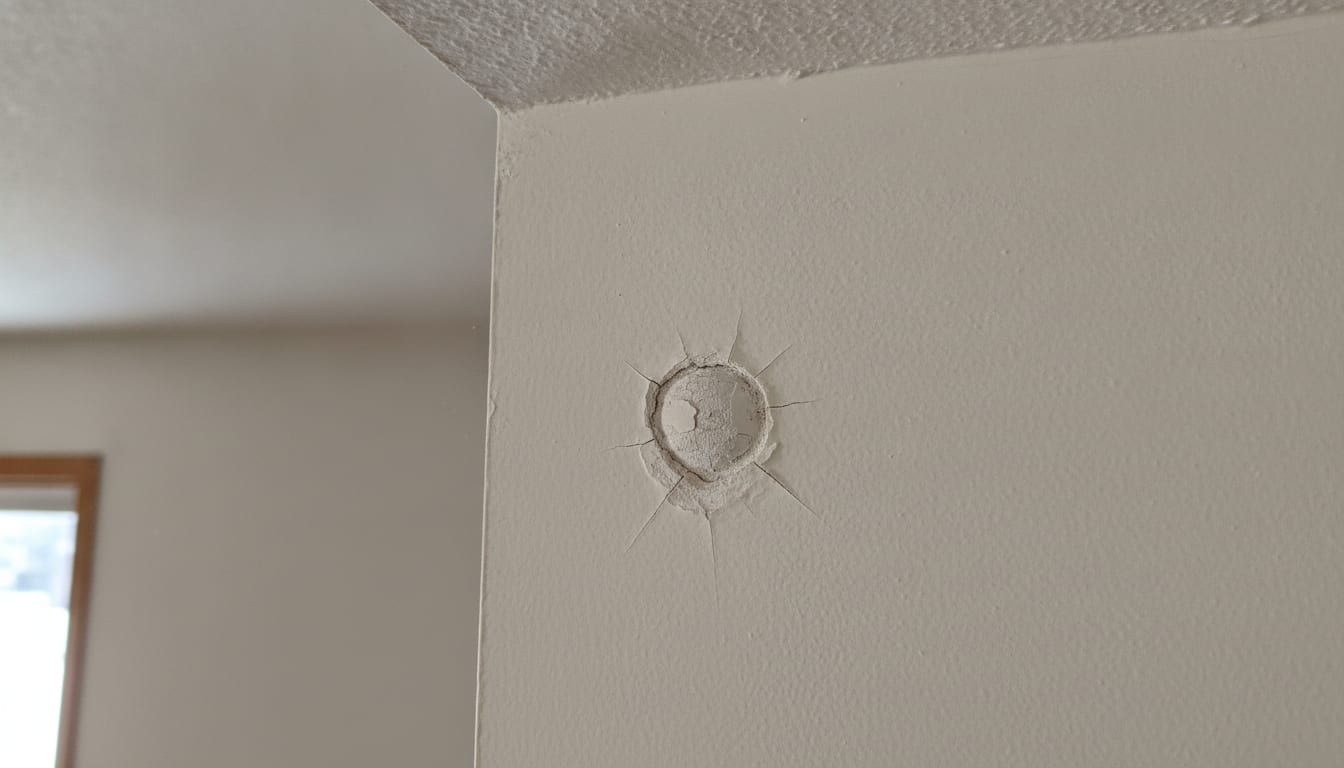
Why drywall nail pops show up your first Lincoln winter, and what the repair involves. Emery's Patching serves Lincoln and about 60 miles around.
If you're in your first or second winter in a newer Lincoln home and you're suddenly noticing little bumps or cracks pushing through the paint, you're not imagining things. This is one of the most common calls we get once the furnace has been running a few weeks straight. It even has a name: nail pops.
Why Nail Pops Show Up the First Heating Season
Wood framing isn't a fixed, dead material - it holds moisture, and that moisture level moves with the seasons. During a humid eastern Nebraska summer, the studs in your walls absorb some moisture and swell slightly. Once fall turns to winter and the furnace kicks on, the house dries out fast. Furnace heat pulls humidity out of the air, and the wood framing shrinks as it dries.
That shrinking matters because the drywall is fastened to the studs with nails or screws. As the framing moves and settles, a fastener can work its way slightly forward, pushing a small bump in the drywall surface right where it's attached. Paint over that bump cracks or flakes, and you get the little ring-shaped bump people call a nail pop. The same drying-and-shrinking cycle is also behind a lot of the hairline cracks that show up at the corners of doors and windows, since that's where the framing meets and moves the most.
This isn't a defect in your house. It's just what happens the first time a newer home goes through a full Nebraska heating season - lots of Lincoln subdivisions, from the Highlands to newer builds in south and east Lincoln, see this in year one or two. Older homes aren't immune either; framing that's been stable for years can still shift if a house goes through an unusually dry winter or a new furnace changes the humidity balance indoors.
What the Repair Actually Involves
Nail pops and corner cracks fall under drywall repair - drywall that's still up on the wall but has failed in some way, as opposed to a hole that needs patching. The fix usually starts with the fastener itself. The nail or screw gets reset or replaced slightly off from the original spot, so it's biting into solid framing again instead of just pushing back out. Then the area gets re-taped or coated, feathered out, and sanded smooth so it blends into the surrounding wall.
Corner cracks at doors and windows get handled a bit differently, since that's often a seam or corner bead issue rather than a single fastener. Loose or bubbled tape, split seams, and dented or loose corner bead are all part of the same category of repair. In every case, the compound needs time to dry between coats, so a repair with more than a couple of spots can take more than one visit - that's something our estimator will go over with you so you know what to expect for scheduling.
One thing worth knowing: a patched or re-taped spot will show through your existing paint unless it's primed first. That's normal and expected - it's not a sign the repair wasn't done right.
When It Might Be More Than a Nail Pop
Most nail pops and small corner cracks are just seasonal movement and nothing to worry about. But a crack that keeps coming back after it's been fixed, one that's noticeably wider at one end than the other, or cracks that show up along with a door that's suddenly sticking in its frame - those are worth mentioning at your estimate. They can sometimes point to something structural going on, and it's better to have it looked at than to just keep patching over it.
If your house was built before 1978, it's also worth mentioning that when you reach out. Paint from before that year may contain lead, and some joint compounds made before the late 1970s contained asbestos. Walls like that shouldn't be sanded until they've been tested.
Rentals, Realtors, and Multi-Unit Properties
If you're a landlord or property manager with a handful of units turning over, or a realtor working toward a closing date, nail pops and corner cracks are easy to overlook until a walkthrough flags them. We take these enquiries the same way as any homeowner's - tell us how many units or rooms are affected and whether there's a deadline, and our office will follow up about getting an estimate scheduled.
Emery's Patching and Drywall Repair is a locally owned drywall company based in Lincoln, Nebraska, part of Lefebvre Enterprises, and we serve Lincoln and about 60 miles around it, Omaha included. Estimates are free - our estimator looks at the nail pops or cracks in person and gives you a price before anything gets scheduled. If your walls are showing the signs of that first dry winter, give us a call at (531) 331-4700 or send us your details and we'll be in touch.
Frequently Asked Questions
Why do nail pops only show up in winter?
Furnace heat dries out the air and the wood framing inside your walls, causing the studs to shrink slightly. That shrinking can push drywall fasteners forward just enough to create a small bump or crack in the paint, which is why it's so common in a house's first heating season.
Will a nail pop come back after it's fixed?
A properly reset fastener and re-taped area usually holds up fine through normal seasonal movement. If a crack keeps returning in the same spot, it's worth pointing out at the estimate so our team can take a closer look.
Do I need to repaint after a nail pop repair?
The repaired area will show through existing paint unless it's primed, so most people touch up paint afterward. We can go over what's included for your specific job at the estimate.